
Barriers are not always obvious

More than eight million people in Canada have a disability. Creating a more inclusive world starts with the choices we make every day. By removing physical, social and systemic barriers, we can create A World for Everyone.
Sign the pledge

Image
Concrete barrier with white diagonal stripes next to a white loading symbol, on a purple background.

Communicating down to people is a barrier.

People with disabilities often encounter small but significant barriers in everyday interactions. Sometimes people speak to a support person instead of addressing them directly, make assumptions about what they can understand, or ask invasive questions about their disability. These experiences can leave people feeling excluded, overlooked, or disrespected.

Everyone deserves to be treated with dignity and respect. Communicate with people with disabilities as you would anyone else. If you’re unsure how to support someone, it’s okay to ask what they need and listen to their preferences.

Actions to take:

  • Communicate directly and respectfully with people with disabilities.
  • Speak clearly and in plain language, but don’t make assumptions about what someone understands.
  • Focus on how to support someone, not on their diagnosis. Ask only what you need to know to be helpful.
Image
Concrete barrier with an icon of a person speaking down to someone sitting

Helping without asking is a barrier.

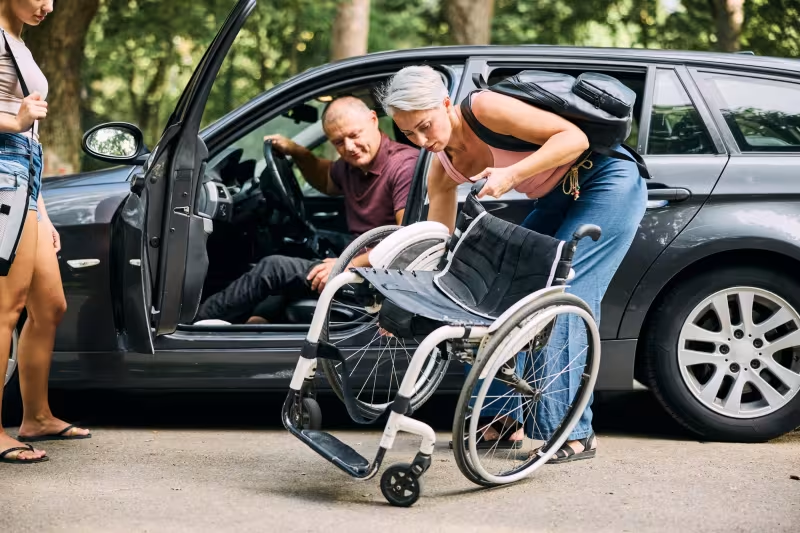
People with disabilities are often offered unsolicited help. This can look like having their mobility device (such as a wheelchair) touched or moved without their consent or interacting with a service animal while it’s working. These actions are often well-intentioned, but they can stem from assumptions about what a person needs.

It’s important to consider both your intent and your impact. Anticipating needs may feel supportive, but it can leave the person with the disability out of the conversation. Leading with curiosity means setting assumptions aside and asking directly about their needs. Start with questions, such as, “What do you need?” or “How can I support you?” These open-ended questions create space for people to identify whether support is needed and what that support should look like. Would you like any assistance? is much more clear.

Actions to take:

  • Lead with respect and curiosity.
  • Let others identify their needs without judgment.
  • Respect people's independence, choices, and dignity.
  • Treat mobility devices and service animals with respect.
Image
Concrete barrier with an open hand

Physical obstacles are a barrier.

Moving around in the world should be simple and barrier-free. Yet 56 per cent of people with disabilities in Canada experience barriers at entrances, exits, and sidewalks.v

Some barriers are built into the design of buildings and public spaces. While addressing these barriers often requires broader planning, investment, and policy change, many accessibility challenges are created through everyday actions. A sidewalk blocked by a sign, an automatic door obstructed by merchandise, or snow and ice that make travel unsafe can all prevent people from accessing their communities.

We can all play a role in creating more accessible spaces by noticing and removing barriers within our control, while also supporting efforts to make public spaces more accessible for everyone.

Actions to take:

  • Keep entrances, exits, and paths of travel clear.
  • Report accessibility barriers when you notice them.
  • Support policies and initiatives that make public spaces more accessible.
Image
Concrete barrier with a person walking with a cane

Assumption based on appearance is a barrier.

You can’t tell whether someone has a disability based on their appearance. Before judging someone for using an accessible parking spot, having a service animal, or wearing a mask, remember that not all disabilities are apparent.

People with non-apparent disabilities often face unique barriers because others may not believe them or may expect them to repeatedly prove their disability. Rather than making assumptions about someone’s needs or experiences, trust that people are the experts on their own lives.

Actions to take:

  • Challenge your assumptions about what disability looks like.
  • Support people’s right to use the accessibility supports they need.
  • Trust people when they tell you about their needs and experiences.
Image
Concrete barrier with a person and lines radiating around them

Underestimating disability is a barrier.

There are more than eight million people with a disability in Canada. Within this community lies extraordinary diversity. People with disabilities have full lives, including as leaders, creators, workers, students, parents, advocates, and community members. Disability doesn’t limit what a person can do – barriers do.

Biased attitudes, stereotypes, and harmful opinions about disability limit opportunities. The same is true for built environments and systems that exclude people with disabilities from spaces and communities. Instead of underestimating people with disabilities, consider how you can help to eliminate barriers and enhance belonging.

Actions to take:

  • Approach each person with curiosity and respect, not assumptions.
  • Remove barriers so everyone can contribute their strengths.
  • Learn about the different interests, expertise, and identities that make everyone unique.
Image
Concrete barrier with a person icon and an arrow pointing down

Employment discrimination is a barrier.

People with disabilities in Canada are less likely to be employed and have lower median incomes than those without disabilities.i Biased attitudes, stereotypes, and harmful opinions about disability limit opportunities for work.

For people with disabilities who do work, barriers affect workplace inclusion and advancement. 43 per cent of people with disabilities in Canada who are employed say they could work more hours if their workplaces were more accessible.ii

Accommodations and accessibility benefit everyone. We can all play a role in supporting barrier-free participation in the workplace.

Actions to take:

  • Help create workplaces free of barriers and bias.
  • Focus on talent, qualifications, and skills – not assumptions.
  • Make space for everyone to belong at work.
Image
Concrete barrier with a person in a suit and tie

Disability stigma in media is a barrier.

Despite progress, people with disabilities continue to be mocked or joked about in media. Derogatory jokes about disability normalize exclusion – and that’s no laughing matter. 37 per cent of people with disabilities in Canada report that they’ve experienced attitudinal barriers, including misconceptions and assumptions about their disability.iii

The good news? There are incredible creators, performers, and artists with disabilities making media that tells real stories of disability. Supporting their work is as easy as clicking “subscribe.”

Actions to take:

  • Choose to consume media that frames disability positively.
  • Educate others about why ableist jokes are harmful.
  • Support creators with disabilities and authentic disability representation.
Image
Concrete barrier with a play button

Expecting others to educate you is a barrier.

People with disabilities are often expected to educate others about their experiences, or to speak on behalf of the whole disability community. This expectation to constantly educate is exhausting, and it’s also unrealistic.

One person can’t represent everyone. Each person has a unique relationship with disability, shaped by their own experiences, beliefs, values, and intersecting identities. If you’ve met one person with a disability, you’ve met one person with a disability.

We all have room to grow and learn when it comes to accessibility and inclusion. Take ownership of your own learning journey, rather than putting the onus on people who are already navigating a world that wasn’t built with inclusion in mind.

Actions to take:

  • Learn about disability from books, podcasts, and thought leaders.
  • Avoid tokenization, where one person is expected to represent a whole community.
Image
Concrete barrier with a head and a checkmark inside

Inaccessible housing is a barrier.

Housing is a human right. People with disabilities should be able to easily find homes that are both affordable and accessible, with the supports they need to live independently.

Yet right now, many people face serious challenges. Accessible housing is in short supply, often too expensive, and not connected to the care and services people need. As a result, some people live in unsafe or unsuitable homes, experience poor health, or even become unhoused. Long wait lists and complicated application systems make things worse.

Everyone may need accessible housing as they age, so making housing accessible or adaptable as a default is good policy for us all.

Actions to take:

  • Ask candidates and elected officials what they’re doing to address the accessible housing crisis.
  • Support candidates and policies that make accessible and adaptable housing standard.
Image
Concrete barrier with a house icon and an X

Careless words are a barrier.

Language plays an important role in shaping attitudes about disability and inclusion. As language evolves, some words and phrases that were once commonly used are no longer considered respectful. For example, terms like “handicapped” still appear in some laws, policies, and signs, even though they are no longer preferred. Other terms once used in medical or educational settings (like the R-word) are now widely recognized as offensive.

Some ableist language is so common that people may not notice it. Words and phrases that use disability as a metaphor for something negative (like “lame” or “mental”) can unintentionally reinforce stereotypes and stigma. Choosing more accurate and respectful language helps create a culture of inclusion and belonging.

Actions to take:

  • Swap out common ableist terms for more inclusive alternatives.
  • Use specific and literal language to say what you mean.
  • Stay open to learning, as preferred language evolves.
Image
Concrete barrier with a speech bubble

Inaccessible content is a barrier.

Giving, receiving, and understanding information are essential parts of daily life. Yet 48 per cent of people with disabilities in Canada experience one or more accessibility barriers when communicating.iv Many different barriers can get in the way of communication, including small or illegible font, poor colour contrast, complex jargon, and lack of image descriptions or captioning. When communication is barriered, inclusion, participation, and belonging are all impacted.

Accessible communication benefits everyone. Clear language, multiple formats, and thoughtful design make information easier to find, understand, and use. Small changes can have a significant impact on whether people can fully participate in work, services, and community life.

Actions to take:

  • Add image descriptions and accurate captions.
  • Communicate in plain language.
  • Make information available in multiple formats that work for different needs.
Image
Concrete barrier with icons for music, video, text, and a photo

Social exclusion is a barrier.

Accessibility is an important part of planning inclusive events and gatherings. Yet it’s often overlooked. A venue may not have an accessible entrance or washroom, a community event may lack accessibility supports, or a meeting may be planned without considering participants’ access needs. These barriers can prevent people with disabilities from fully participating and feeling included.

People in your workplace, social circle, and community may have a wide range of access needs. By asking in advance and planning with accessibility in mind, you can help create experiences where everyone can participate.

Actions to take:

  • Make it standard practice to ask about access needs in advance.
  • Check accessibility before choosing a venue or planning an event.
  • Support events and venues that prioritize accessibility and inclusion.
Image
Concrete barrier with three people standing together

Higher costs are a barrier.

The cost of living with a disability is often higher. Expenses such as health care, medication, assistive devices, transportation, and personal support can create significant financial pressure.vi In fact, 66 per cent of people with disabilities in Canada report unmet needs related to health care, medication, assistive devices, or daily activities because of cost.vii

These added expenses, combined with barriers to employment and income, mean that people with disabilities are more likely to experience poverty.viii Addressing these challenges requires more than individual solutions. Progress happens when people share their lived and living experiences, raise awareness, and advocate for policies that reduce barriers and improve affordability.

Actions to take:

  • Support public policies that address the extra costs associated with disability.
  • Ask your elected officials how they're improving affordability and accessibility for all.
Image
Concrete barrier with an open hand and a dollar sign

Inaccessible transportation is a barrier.

Getting around your community shouldn’t be an epic journey. But for many people with disabilities, it’s exactly that. Nearly half (47.3 per cent) of people with disabilities in Canada have unmet transportation needs.ix Transportation barriers can make it difficult to get to work, school, medical appointments, social activities, and community spaces.

Accessible transportation is about more than having a wheelchair accessible vehicle. Snowbanks can block access to bus stops, elevators at transit stations can be out of service, and accessible transit services may be difficult to book or unreliable.

Reliable and accessible transportation helps people participate fully in their communities and live more independently.

Actions to take:

  • Report accessibility barriers.
  • Support policies and investments that improve accessible transportation.
Image
Concrete barrier with a bus icon

Complex systems are a barrier.

Across Canada, people with disabilities engage with systems that are fragmented, under-resourced, and slow to evolve. Essential services, accessible housing, assistive technology, and livable incomes remain out of reach for far too many. These gaps reflect policy choices and funding structures that have not kept pace with the realities of disability in Canada.

Creating change takes awareness, advocacy, and collective action. Every voice adds insight, credibility, and momentum to this work. Together, we can dismantle barriers and build the inclusive future people with disabilities are calling for.

Actions to take:

  • Listen to and amplify the perspectives of people with disabilities.
  • Support policies and investments that improve accessibility, affordability, and inclusion.
  • Advocate for systems that are easier to navigate and designed with accessibility in mind.
Image
Concrete barrier with three stacked layers

A world for everyone starts with me

I pledge to use my influence, choices, and actions to remove barriers, advance accessibility, and create a world where everyone participates and belongs.

[MAKEFORMS_PLEDGE_NUMBER] people have pledged to build A Word for Everyone.

i Statistics Canada. Canadian Survey on Disability, 2022; Statistics Canada. Income of individuals disability status (Canadian Income Survey / CSD-linked tables), 2020.
ii Rick Hansen Foundation. Accessibility report.
iii Statistics Canada. Canadian Survey on Disability data tables.
iv Statistics Canada. Canadian Survey on Disability data tables.
v Statistics Canada. Canadian Survey on Disability data tables.
vi United Nations Department of Economic and Social Affairs. UN Flagship Report on Disability and Development 2024.
vii Statistics Canada. The Daily.
viii Statistics Canada. Canadian Income Survey (Market Basket Measure), 2020.
ix Statistics Canada. Survey Series on Accessibility, 2025.