
 Search


Make your home safer and easier to live in
When your home or vehicle isn’t accessible, it affects your independence and your ability to stay in the place you love. The Ontario Home and Vehicle Modification Program (HVMP) helps children and adults with disabilities pay for basic home and vehicle modifications that improve accessibility, reduce safety risks, and support independent living.
The program focuses on removing physical barriers that may prevent children and adults with disabilities and mobility limitations from taking part in everyday activities. This can include installing ramps and roll-in showers, or vehicle modifications like specialized seating and driving controls. The goal is to make your home environment work better for you.
By making these changes, you can return from the hospital and continue living at home while avoiding future injuries. You can also maintain employment and participate more fully in everyday life. Reach out to our team today to get started.
What this program covers
You may be able to get help paying for basic home and vehicle modifications. The program offers up to a lifetime maximum of $15,000 for home modifications, adaptations, and devices and up to $15,000 for vehicle modifications every 10 years.
Assistive devices and home adaptations can help you move more safely and manage daily activities at home. They’re often used to prevent falls, support mobility, and improve accessibility.
Floor or ceiling lifts
Environmental controls for appliances, lights, phones, and doors
Repairs to eligible equipment
Modular ramps (no concrete ramps)
Stairlifts and ceiling track lifts
Tub cut-outs
Automatic door openers
Portable roll-in shower
Tub slider systems
Vertical platform lifts (not eligible for rentals)
For a complete list of eligible items, please read the HVMP Devices and Adaptations Information Package.
Home modifications are physical changes to your living space that remove barriers and make it easier to move through and use your home safely. These changes are typically more permanent and focus on improving accessibility in key areas like entrances, kitchens, and bathrooms.
Widening doors or installing sliding/folding doors
Adjusting the kitchen layout (cupboards, counters)
Building a roll-in or zero-threshold shower (or portable bathing equipment, if not possible)
Installing accessible toilets and sinks
Wet-room conversions
For a complete list of eligible items, please see the HVMP Home Modifications Information Package.
If your home modification is approved, please be aware of the following:
You’re responsible for selecting your contractor.
You may need to get property-related approvals before work begins.
Homeowners are responsible for addressing any issues discovered during construction, such as mould, plumbing, electrical, or code-related deficiencies.
Disability Can reviews eligibility and administers funding but doesn’t supervise construction projects or contractor work.
Additional responsibilities and project requirements will be reviewed with approved applicants before work begins.
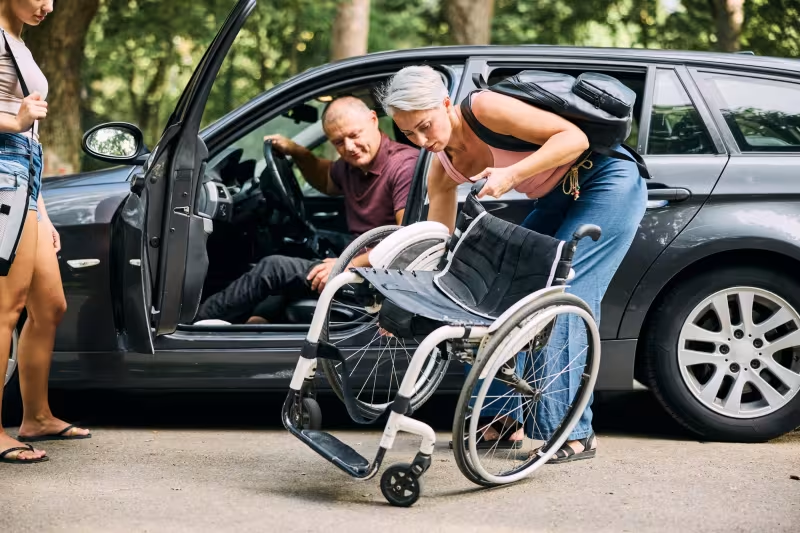
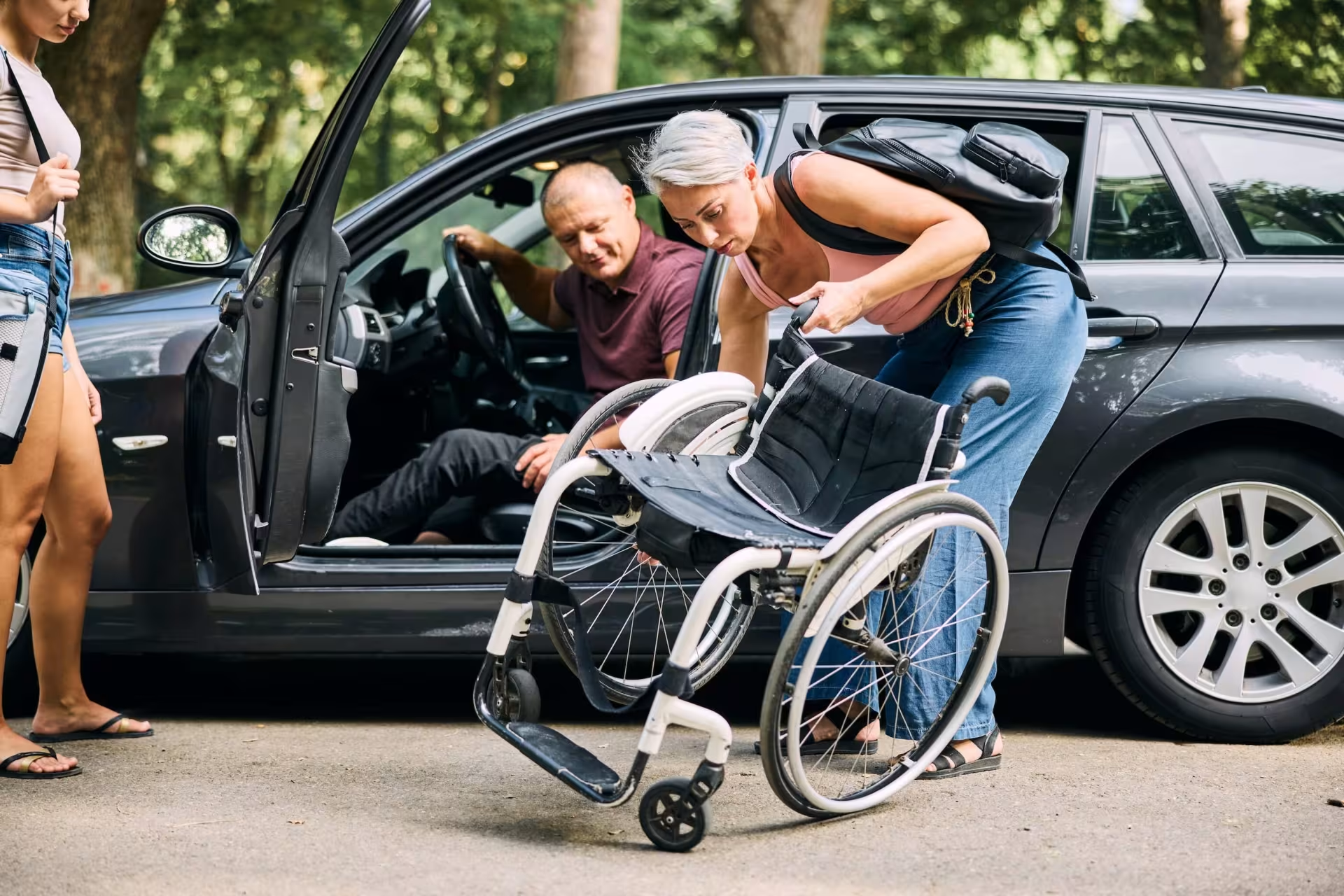
Vehicle modifications are physical changes or added equipment that make your car, van, or SUV accessible and easier to drive or use. These changes can support you to do things on your own, such as going to work or running errands.
Driving controls, such as hand controls, left-foot accelerators, pedal extensions, steering aids, and hand-operated secondary controls
Swivel seats, transfer boards, and lifts
Wheelchair ramps and hoists
Lowering the floor of a vehicle
For a complete list of eligible items, please see the HVMP Vehicle Modifications Information Package.
Who can apply?
To be eligible for this program, you must
-
Image

Be a permanent Ontario resident.
-
Image
Be in financial need (i.e., meet the net household income limits).
-
Image
Have a permanent, ongoing, or recurring disability that limits mobility and makes it difficult to manage activities of daily living (e.g., eating, bathing, toileting) and/or leave your home to access essential medical care or community services.
How to apply
Here’s what the application process looks like.
Download and fill out the application form. If you’re unsure about anything, give us a call and we’ll help.

You’ll need to provide proof of income, proof of home ownership or landlord consent, and a letter from an occupational therapist or a Verification of Disability Form completed by a healthcare provider. For more details, please see the required documents section.

Reach out to contractors or registered medical vendors/suppliers and get detailed quotes for the specific devices or home modifications you need. For some projects (e.g., custom stairlifts, modular ramps), you’ll also need to provide pre-installation photos, drawings, and measurements.

Send in your completed package with all supporting documents to Disability Can for review.
Checking your net household income
Your household income determines whether you qualify for funding and whether a financial contribution is required. Your net household income is the total money earned by you (the applicant), your spouse or common-law partner, and anyone else living in your home who is 18 years of age or older.
If the applicant is a child (under 18), then the total household income must include earnings from their parent(s) or guardian(s) as well as anyone else in the home who is 18 years or older.
Here’s a chart that shows the income limits for each household size:
| Household Size | Minimum Net Household Income | Maximum Net Household Income |
|---|---|---|
| 1 adult | $38,000 | $54,000 |
| 2 adults | $54,000 | $65,000 |
| 3 adults | $65,000 | $71,000 |
| 4 or more adults | $71,000 | $71,000 |
How to determine if you qualify
Fully eligible (no contribution needed): If your net income is at or below the minimum net household income value for your household size, then you qualify for full funding.
Partial contribution needed: If your net household income is between the minimum and maximum net household income values for your household size, you'll need to pay part of the cost.
Not eligible: If your net income is at or above the maximum net household income for your household size, you don't qualify for funding.
I am in the partial contribution range. How much will I need to pay?
If your net income falls between the minimum and maximum net household income values, then you’ll need to pay a percentage of the total cost.
Here’s how to calculate the amount:
Subtract your net income from the minimum net household income value for your household size.
Find your contribution percentage.
$1 to $5,001: You pay 10% of the cost.
$5,001 to $10,000: You pay 20% of the cost.
$10,001 to $15,000: You pay 30% of the cost.
$15,001 to $20,000: You pay 40% of the cost.
Multiply the total cost of the device or project by the contribution percentage.
Important information
Before you apply for the Ontario Home and Vehicle Modification Program, please note the following:
Funding is not guaranteed. Applications are reviewed based on eligibility, assessed need, and available funding.
Applications are prioritized according to assessed needs.
Funding is limited to basic and essential accessibility solutions.
Construction projects are generally considered only after less costly accessibility solutions have been explored.
Work started before approval is not eligible for reimbursement.
Required documents
Before you apply, please ensure you have the following documents:
Completed application form
Notice of Assessment from the most recent tax year
Occupational therapist (OT) assessment or Verification of Disability Form
Detailed quote(s) from a registered contractor, supplier, or medical vendor
Property tax bill or landlord approval (if required)
Photos, drawings, or measurements for certain projects
Note that vehicle modification applications may also require the following:
Valid driver's licence
Vehicle ownership
Vehicle insurance
VIN photographs
Vehicle photos
Vehicle Safety Standards Certificate
If you’re missing any documents, your application can’t be processed.
Frequently asked questions
No. Funding is not guaranteed. All applications are reviewed based on eligibility, assessed need, and available program funding.
No. The program doesn’t reimburse costs incurred before approval has been granted. Do not begin work or purchase equipment until you’ve received authorization from the program.
Applicants must provide one of the following:
An occupational therapist (OT) assessment; or
A Verification of Disability Form completed by an approved healthcare professional.
The documentation must show the connection between the disability-related need and the requested modification or equipment.
Yes. Some devices, adaptations, and modifications may be eligible in rental properties. Certain projects require written landlord approval, and some modifications may not be eligible based on the type of property or living arrangement.
The program doesn’t fund all disability-related products or home improvements. Examples of requests that may not be eligible include
Hospital beds and mattresses
Swimming pools
Exercise equipment
Wheelchairs, walkers, scooters, or canes
Household appliances
General home repairs
Cosmetic renovations
Eligibility is determined according to program guidelines.
No. The program is not a home renovation program. Funding is limited to accessibility-related bathroom modifications that remove disability-related barriers and support essential bathing and toileting needs.
Still have questions?
Get support from our team. Whether you have a quick question about the program or need help figuring out where to start, reach out anytime. We’re here for you.


Testimonials
People who have found meaningful support through our program.
Service Users
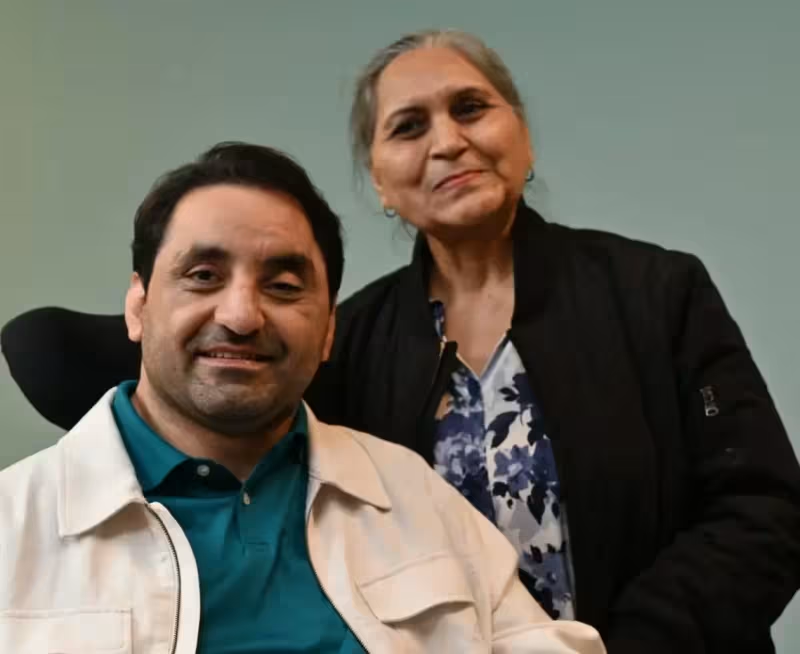
“This program changed my life. I can finally live safely and independently in my home.”
“This program helped me stay in my home instead of moving into long-term care.”
“The stairlift allows me to go up and down the stairs without fear of falling.”
“Our family has peace of mind knowing our loved one is safe at home.”
This program is funded by the Ontario Ministry for Seniors and Accessibility and is ISO 9001:2015 registered.